Get your orders delivered quickly and reliably across the UK with our efficient shipping network.
We provide premium-grade materials designed for durability and professional results every time.
Shop with confidence using our safe, secure, and hassle-free payment options.
Explore LED sign lights for illuminated signs, channel letters, light boxes and display projects. This category includes LED modules, mini modules, RGB modules, transformers, flex strips, neon flex and projection light boxes for professional sign making, supplied to sign makers and fabricators across London, Manchester, Birmingham and the wider UK.
Choose lighting by voltage, brightness, colour, installation type and signage application to build reliable illuminated displays that perform consistently from installation day through years of continuous use.
...
Illuminated signage lives or dies on the quality of its lighting components. A well fabricated channel letter or light box can still look uneven, dim or unreliable if the LED modules, transformers and wiring behind it are mismatched or poorly specified. Sign makers who source lighting components as a coordinated system, rather than piecing together whatever is available, consistently produce signage that looks better on installation day and keeps looking that way for years after ward.
LED lighting has become the standard choice for illuminated signage because it delivers strong brightness at low power draw, runs cooler than older lighting technologies, and offers a service life measured in tens of thousands of hours rather than the far shorter lifespan of traditional neon tubing or incandescent options. For sign makers and their clients, that translates directly into lower running costs and far less callback work for failed illumination.
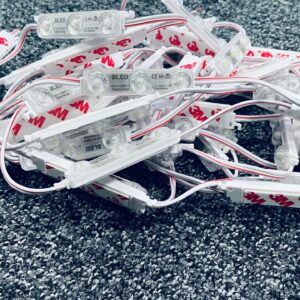
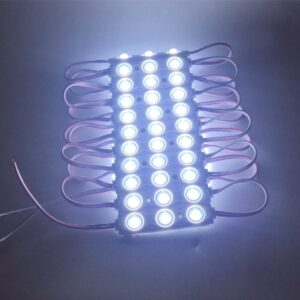
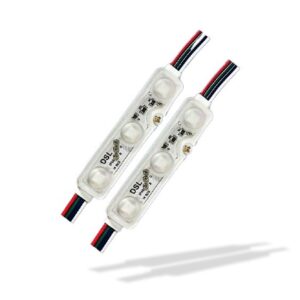
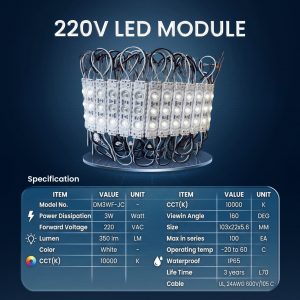
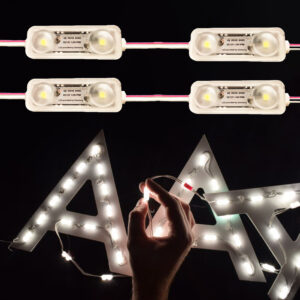
LED modules are the core building block of most illuminated signage projects. Mounted inside a channel letter or behind a light box face, modules are wired together in strings and connected to a transformer to deliver consistent, even illumination across the sign.
Standard LED modules suit the majority of channel letter and light box applications, offering a balance of brightness, spacing flexibility and cost that works well across most letter sizes. Selecting the correct module type, spacing and quantity for a given letter or light box is one of the most important decisions in any illuminated sign build, since undersized or poorly spaced modules produce visible hot spots and uneven glow, particularly on larger letter faces or shallow light boxes.
Mini LED modules are designed for smaller channel letters, thin letter returns and applications where a standard sized module simply will not fit within the available depth. These compact modules deliver a similar quality of illumination to standard modules while fitting into the tighter fabrication tolerances that small scale signage often demands.
Sign makers producing detailed or small format illuminated lettering, such as reception signage, interior branding or compact shopfront letters, rely on mini modules to maintain consistent brightness without being constrained by letter depth.
RGB modules give sign makers the ability to produce colour-changing and dynamic lighting effects, rather than a single fixed colour output. Paired with the appropriate controller, RGB modules can cycle through colours, sync to brand palettes for different campaigns, or create eye-catching effects for retail displays, entertainment venues and promotional signage.
This flexibility makes RGB lighting a popular choice for businesses that want their illuminated signage to do more than simply light up, supporting seasonal colour changes, branded lighting sequences or attention-grabbing display work for events and promotions.
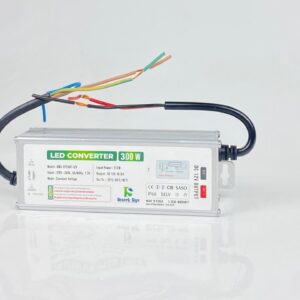
Transformers, also referred to as LED drivers or power supplies, convert mains voltage down to the low voltage LED modules require, while regulating the current delivered to each string of lights. Correct transformer sizing relative to total LED load is essential: an undersized transformer leaves modules under powered and dim, while an oversized one adds unnecessary cost and bulk to the installation.
Reliable transformer selection is just as important as module selection, since even the best quality LED modules will unde rperform or fail prematurely if paired with a mismatched or poor quality power supply.
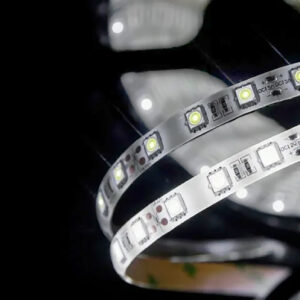
Flex strips offer a flexible, continuous lighting solution suited to edge lighting, cove lighting, halo-lit letters and accent illumination where a string of discrete modules would not give the smooth, continuous glow the design calls for. Their flexibility allows installation around curves and irregular shapes that rigid modules cannot follow, making them a common choice for decorative and architectural signage applications alongside standard channel letter and light box work.
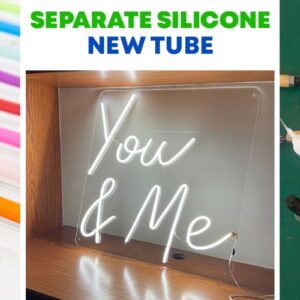
Neon flex has become a popular alternative to traditional glass neon tubing, replicating the classic look of neon signage while offering the durability, lower running costs and easier handling of LED technology. Unlike fragile glass neon, neon flex can be cut, shaped and installed with far less risk of breakage, making it practical for both indoor feature signage and outdoor illuminated branding.
Sign makers use neon flex for retro-style shopfront lettering, contemporary interior signage, and halo or edge-lit letter effects, often specifying it alongside standard channel letter materials when a client wants the depth and structure of fabricated letters combined with a distinctive neon-style glow.
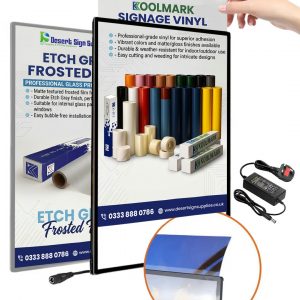
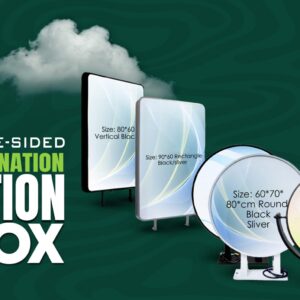
Projection light boxes provide a self-contained illuminated display solution for signage that does not require full channel letter fabrication. Commonly used for menu boards, promotional displays, retail graphics and shopfront advertising, projection light boxes combine an internal LED lighting system with a printed or vinyl graphic face, giving businesses a straightforward way to add illumination to flat signage without a full fabrication project.
These light boxes work particularly well when paired with printed graphics produced on our sign sheets range, giving sign makers a complete illuminated display built from consistently sourced materials.
Voltage. Most sign lighting systems run on low voltage, typically 12V or 24V, stepped down from mains supply by a transformer. Matching module voltage to the correct transformer output is essential for both performance and safety.
Brightness. Measured in lumens per module or per metre for flex products, brightness requirements vary significantly by application, with larger letters, deeper lightboxes and daylight-visible outdoor signage typically requiring higher output than smaller interior signage.
Colour temperature and RGB capability. Fixed white LED modules are available across a range of colour temperatures, from warm white through to cool daylight white, while RGB modules add full colour-changing capability for dynamic display work.
Installation type. Channel letters, light boxes, edge lighting and halo effects each call for a different lighting component, whether that is a standard module, mini module, flex strip or neon flex, and matching the product to the fabrication method is critical to achieving an even, professional finish.
Signage application. Retail branding, commercial shopfronts, exhibition displays and architectural feature lighting each place different demands on lighting components, from continuous duty cycle reliability for permanent shopfront signage to flexible, easily reconfigured lighting for temporary exhibition and event work.
LED sign lighting rarely stands alone. A complete illuminated signage project typically draws on multiple categories of material working together: fabricated channel letter materials for 3D letter structure, rigid sign sheets for light box faces and backing panels, and signage vinyl for lettering, graphics and finishing detail applied over or alongside the illuminated elements.
Sourcing lighting components alongside these related materials from a single supplier helps sign makers keep specifications consistent across a project, simplifies ordering for repeat and multi-site work, and reduces the risk of compatibility issues between components sourced from different manufacturers.
Whether you are fabricating shopfront channel letters in London, building a light box display for a retail unit in Manchester, or specifying architectural accent lighting for a commercial project elsewhere in the UK, our LED sign lighting range gives sign makers the components needed to deliver a reliable, professional illuminated result.
Reach out to us today and get expert guidance for all your signage and printing requirements.